Organic Modern Interior Design: Style Guide, Palette and Materials
Soft curves, natural materials and a warm, earthy palette on a clean modern frame. How to design organic modern rooms that feel calm and tactile, never bland or beige by default.
Key takeaways
- Keep architecture clean and let furniture and lighting bring the curves.
- Use tonal neutrals, then add one darker anchor for contrast.
- Texture replaces pattern: plaster, bouclé, linen, stone and wood.
- Balance curves with straight lines so rooms keep their structure.
Organic modern is what happens when minimalism learns to relax. It keeps the clean architecture, open space and restraint of modern design, then softens everything that touches the body and the eye: rounded furniture, limewashed walls, raw wood, stone, linen and wool. Done well, it produces rooms that are calm, warm and quietly luxurious. Done badly, it produces a beige box. This guide explains the principles, palette, materials and furniture that make the difference, with room-by-room advice and a shopping list.
What organic modern means
The style sits between several neighbors. It shares Scandinavian lightness, Japandi restraint and wabi-sabi's love of imperfect natural materials, but it is softer and more sculptural than all three. Where Japandi is spare and linear, organic modern is rounded. Where wabi-sabi embraces the raw and rustic, organic modern keeps a refined, finished edge. Think of a plaster wall with gentle movement, a curved sofa in textured cream fabric, a solid oak table with softened edges and a travertine side table — each piece simple, each piece tactile.
If you are torn between these directions, compare our Japandi and wabi-sabi guides, or try the style quiz.
The style also travels well. It suits new-build apartments with plain drywall and standard ceilings, because it adds warmth through furniture and finishes rather than relying on period architecture. It suits hospitality, where guests respond to tactile, calm rooms. And it adapts to climate: in hot regions it leans toward lighter linen, rattan and pale stone; in cooler ones toward wool, darker wood and heavier drapery. The underlying approach — clean shell, natural materials, soft forms — stays the same.
Core principles
- Simple architecture, soft objects. Keep walls, ceilings and joinery clean and quiet. Let furniture and lighting bring the curves.
- Nature as the main material. Wood, stone, clay, wool, linen, jute, rattan and paper. Synthetic materials are acceptable where performance matters, but should look and feel natural.
- Texture replaces pattern. Instead of prints, use bouclé, slubby linen, rough plaster, open-pore stone and hand-thrown ceramics. The room should invite touch.
- Tonal color. A narrow palette of warm neutrals, layered in several shades, with contrast coming from dark wood or a single deep accent.
- Space around things. Fewer, larger pieces with room to breathe. A single sculptural object on a console does more than ten small ones.
The organic modern palette
#F4EEE4#E3D5C1#C8AE92#A0785A#8A8B72#4A3A2FThe palette works in layers. Use the lightest tone on walls and ceilings, a slightly deeper shade on upholstery and rugs, and the mid-tones on wood and stone. Then introduce one anchor: dark walnut, a charcoal-brown lamp, bronze hardware or a clay-colored ceramic. That single darker element stops the room from dissolving into a single beige tone.
A practical test: photograph the room in black and white. If everything appears as the same gray, you need more value contrast — a darker wood, a deeper rug or a black-brown accent. Palette Studio at /palettes/ can help you build tonal combinations.
Materials and finishes
| Material | Where to use it | What to specify |
|---|---|---|
| Limewash or mineral plaster | Feature walls, whole rooms, range hoods | Brushed or troweled finish; breathable mineral paint on suitable substrates |
| White or natural oak | Floors, dining tables, joinery | Matte oil or hardwax oil; rift or quarter sawn for calm grain |
| Travertine | Side tables, lamp bases, bathroom surfaces | Honed; filled for kitchens, unfilled for decorative pieces |
| Linen | Curtains, bedding, loose sofa covers | Stonewashed or washed linen, mid-weight |
| Wool bouclé | Accent chairs, curved sofas, headboards | Tight loop, appropriate rub count for use |
| Jute, sisal, wool rugs | Living rooms, bedrooms | Wool or wool-jute blend for softness underfoot |
| Rattan and cane | Chair backs, cabinet doors, pendants | Natural or lightly stained; avoid glossy lacquer |
Metals are muted: aged brass, bronze, blackened steel. Avoid bright chrome and high-gloss finishes. Our trending materials guide goes deeper on stone and plaster options.
Furniture forms
- Curved sofa: a crescent, kidney or rounded-corner sofa in cream, oat or mushroom. Deep seats of 60–65 cm (24–26 in) and low backs suit the relaxed mood. Allow at least 90 cm (36 in) of walkway around it; curves need more space than straight sofas.
- Sculptural accent chair: a barrel or tub chair in bouclé or a low lounge chair with a solid wood frame.
- Chunky wood tables: a round or oval dining table on a pedestal or thick block legs, with softened, eased edges.
- Stone accents: a travertine plinth side table, a stone or plaster coffee table with a rounded profile.
- Upholstered bed: a low bed with a tall, rounded or channel-tufted headboard in linen or bouclé.
- Lighting: paper lanterns, alabaster-effect or plaster wall lights, ceramic lamps with linen shades and mushroom-shaped table lamps.
Lighting deserves particular care, because soft textures only read when light grazes across them. Place wall lights or a floor lamp close to a plastered or limewashed wall so the surface movement shows. Keep color temperature at 2700K throughout living and sleeping areas, choose fittings with a high CRI (90 or above) so wood and stone render accurately, and put everything on dimmers. Diffused sources — paper, fabric, alabaster-effect resin — suit the style far better than exposed bulbs or tight spotlights. Our lighting calculator helps estimate how many lumens each room needs.
Room by room
Living room
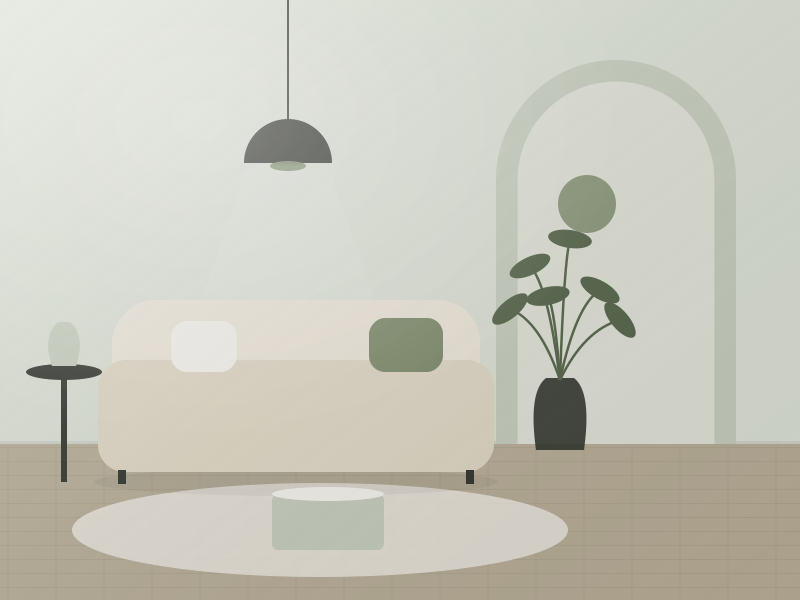
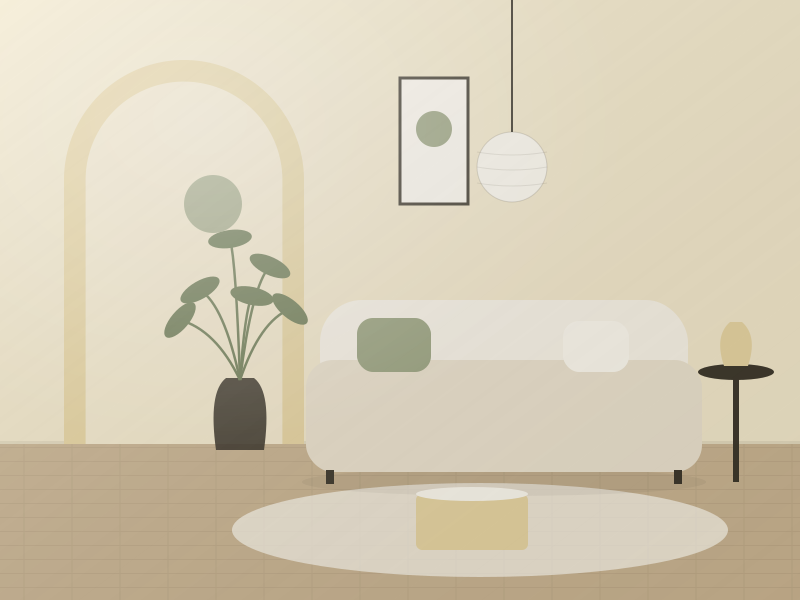
Use one curved sofa or two facing sofas, a round or organic coffee table in wood or stone and a large, soft rug that holds all the front legs. Add a sculptural chair, a floor lamp with a linen shade and a single large artwork in muted, abstract tones. Leave one wall largely empty; negative space is part of the style.
Bedroom
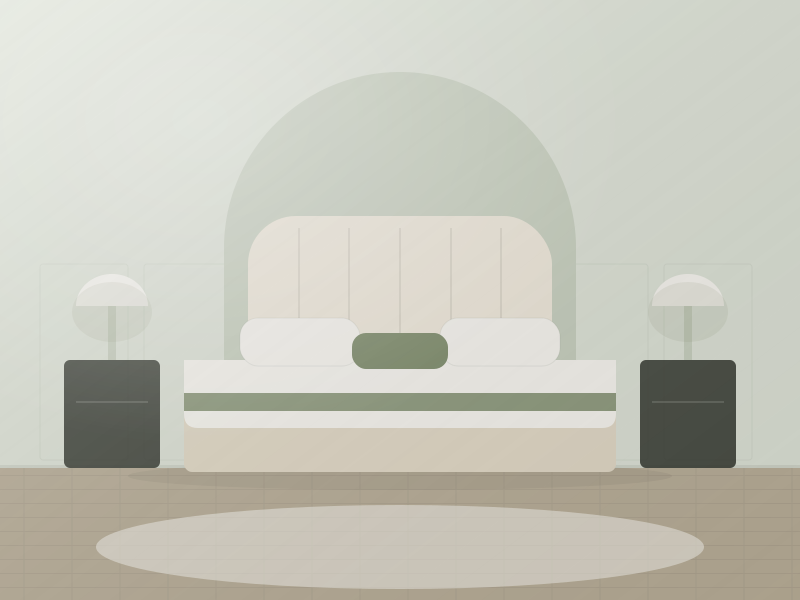
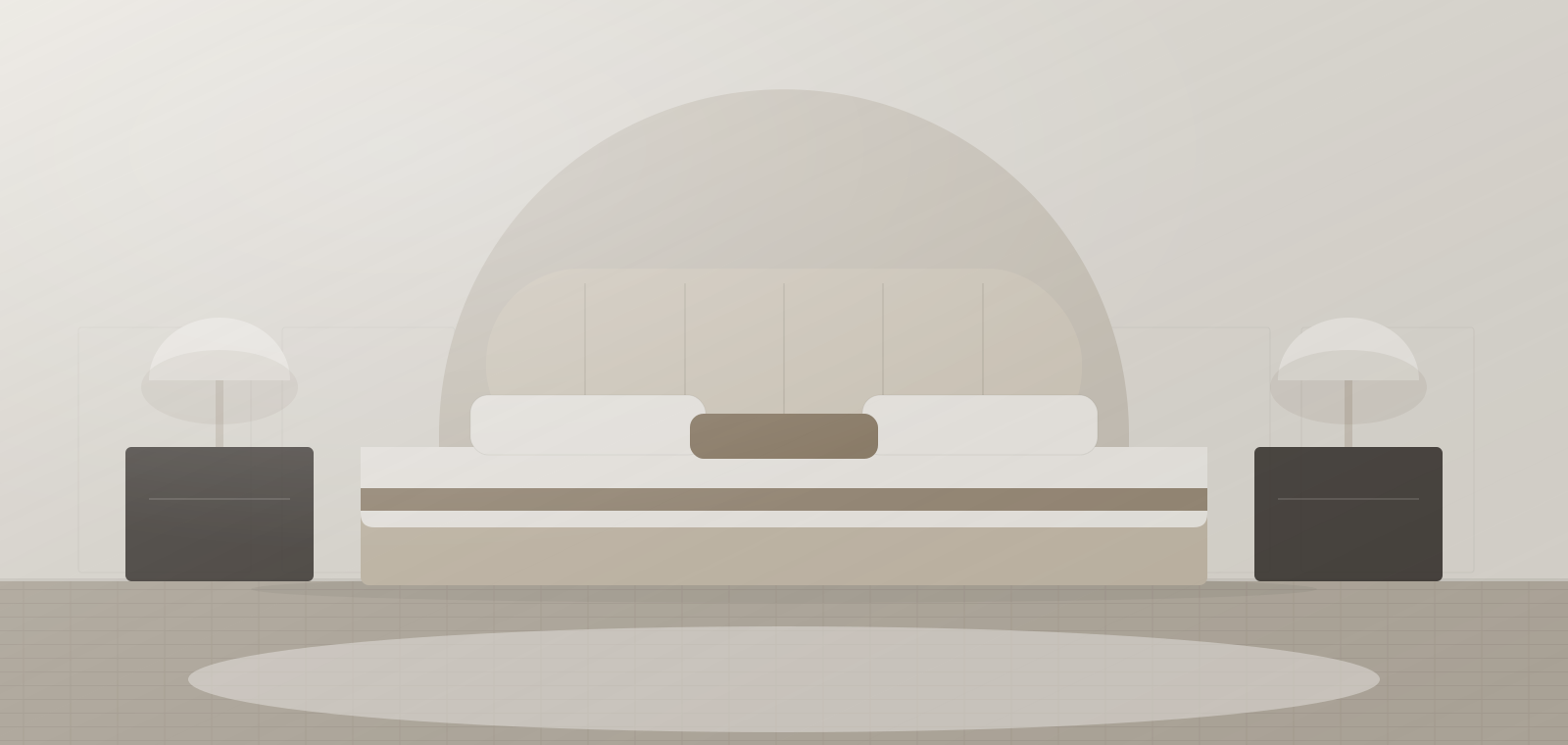
The bedroom is where organic modern shines. Pair a low upholstered bed with washed linen bedding in two or three neutral shades, wood nightstands with rounded corners, ceramic lamps and a wool rug that extends 45–60 cm (18–24 in) beyond the sides of the bed. Linen curtains hung from the ceiling on a slim track soften the architecture; add blackout lining behind. A limewashed wall behind the bed gives depth without color.
Dining room
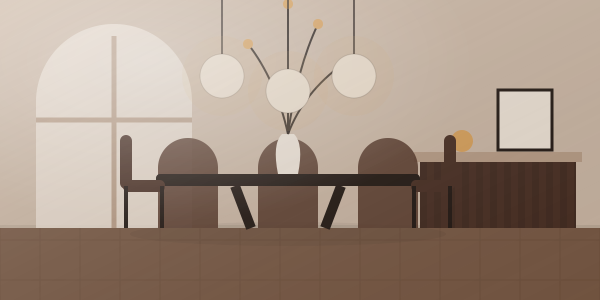
A round oak or walnut table with upholstered or woven chairs, a large paper or woven pendant and a sideboard displaying two or three objects. Round tables need about 60 cm (24 in) of perimeter per diner.
Kitchen and bathroom
Plaster or microcement range hoods, oak cabinetry, honed stone worktops with eased edges and handmade-look tiles. In bathrooms, a stone vessel basin on an oak vanity, rounded mirrors and a textured tile or plaster wall set the tone. See bathroom trends 2027 for more.
Entry and home office
An entry needs only a slim wood console or floating shelf, a round mirror, a ceramic lamp and a sculptural bowl for keys. In a home office, choose a solid wood desk with rounded corners, an upholstered task chair in a neutral woven fabric and closed storage so paperwork disappears. A linen pinboard or plaster-finish wall makes a calmer backdrop for video calls than open shelving.
Common mistakes
- Beige on beige. Without contrast in value and texture, rooms look flat. Add dark wood, bronze or a deep clay tone.
- Too many curves. A curved sofa, curved chairs, round table, round rug and arched mirror together feel soft and shapeless. Balance curves with a few straight lines.
- Fake natural materials. Printed wood-look laminates and plastic rattan undermine the style. Where budget is tight, use fewer real pieces rather than many imitations.
- Impractical fabrics. Loose-weave bouclé snags and pale linen stains. Choose performance or tighter weaves in family homes and hospitality.
- Too many plants and baskets. One or two large plants beat a crowd of small pots. The style is organic, not overgrown.
Making it work on a budget
Spend where you touch: sofa, bed, rug and dining table. These pieces carry the texture of the room and are used every day, so quality shows quickly. Save on walls (limewash is inexpensive compared with specialist plaster), accessories and side tables. Paper pendants and linen curtains transform a room for relatively little. If you are buying for a whole home, rental portfolio or hotel, ordering direct from factories can make solid wood and stone accessible — our sourcing desk collects quotes.
When comparing quotes for upholstery, ask for the frame material (kiln-dried hardwood or plywood), seat construction (sinuous springs or webbing), foam density and fire standard, and the exact fabric composition and rub count. For stone pieces, ask for the finish, whether the stone is filled and how it is packed for shipping; stone breakage in transit is a common and avoidable problem.
Shopping list
- Curved or rounded-corner sofa in textured cream or oat fabric.
- Bouclé or linen barrel accent chair.
- Round solid oak or walnut dining table with eased edges.
- Travertine side table or stone coffee table.
- Low upholstered bed with a rounded headboard.
- Washed linen bedding and ceiling-height linen curtains.
- Wool or wool-jute rug in a tonal neutral (size it with the rug size calculator).
- Paper lantern pendant and ceramic table lamps at 2700K.
- Two or three large handmade ceramic vessels and one large plant.
Shop & source the look
Buy it today — or have it made
Retail links are affiliate links: we may earn a commission at no extra cost to you (disclosure). “Get it made” sends the item to our sourcing desk for factory quotes in custom sizes and finishes.
Frequently asked questions
What is organic modern interior design?
A style that combines clean modern architecture with natural materials, soft curves and a warm neutral palette, emphasizing texture and calm.
How is organic modern different from Japandi?
Japandi is more linear and restrained with a darker, more Japanese palette; organic modern is softer and more sculptural, with rounded furniture and warmer, lighter neutrals.
How do I keep an organic modern room from looking bland?
Add contrast in value and texture — dark wood, bronze, a deep clay accent, rough plaster or stone — and use a variety of materials within a narrow palette.
What colors work for organic modern?
Warm whites, sand, travertine, clay, muted sage and dark walnut brown, layered tonally.
Some links may be affiliate links. Regulations and specifications change — always confirm with suppliers and qualified professionals.