Art Deco Revival: How to Use Deco Style in Modern Interiors
Geometry, glamour and rich materials are back. How to bring Art Deco into a contemporary home or hotel — palette, materials, furniture forms and the details that keep it from tipping into pastiche.
Key takeaways
- Use Deco geometry — fluting, stepped profiles, fans — in form, not everywhere.
- Pair a deep jewel tone with a soft champagne and one metal finish.
- Quality of lacquer, veneer and plating makes or breaks the look.
- Let one Deco element lead each room and keep the rest simpler.
After years of pared-back neutrals, interiors are rediscovering the pleasure of glamour. Fluted walls, lacquered finishes, curved banquettes, polished brass and bold stone all trace back to Art Deco, the style that defined the 1920s and 1930s. The current revival is not a costume drama; it borrows Deco's geometry, craftsmanship and confidence and applies them to modern rooms. This guide explains how to do that — the principles, palette, materials, furniture, room-by-room moves, common mistakes and a shopping list.
Where Art Deco came from
Art Deco takes its name from the 1925 Paris Exposition Internationale des Arts Décoratifs et Industriels Modernes. It was a style of the machine age: it celebrated speed, industry and luxury, drawing on sources as varied as Cubism, ancient Egyptian and Mesoamerican ornament, and the streamlined forms of ships and trains. It spread quickly into architecture, cinemas, ocean liners, hotels and department stores, then into homes, jewelry and product design.
Two strands are worth distinguishing. Early, French-influenced Deco is rich and crafted: exotic veneers, shagreen, lacquer, ivory-toned inlay and stylized floral motifs. Later Streamline Moderne, especially in the United States, is smoother and more industrial: rounded corners, horizontal speed lines, chrome and glass. Today's revival borrows from both, choosing the geometry and materials while leaving behind the more literal ornament.
Principles of the modern Deco look
- Geometry with rhythm. Repeated lines — fluting, reeding, stepped profiles, sunbursts, chevrons, fan and scallop shapes — give Deco its energy. Use them in architecture and joinery rather than applying motifs everywhere.
- Symmetry. Deco rooms are balanced: matching lamps, paired chairs, centered mirrors and axial layouts.
- Contrast and shine. Dark against light, matte against gloss, stone against lacquer, all punctuated by polished metal.
- Curves meeting straight lines. Rounded sofa ends and arched mirrors set against crisp, linear cabinetry.
- Craftsmanship. Inlay, veneer matching, lacquer and metalwork are the heart of the style. Better to have a few crafted pieces than many cheap imitations.
Architecture is the most convincing place to start. Fluted or reeded panels on a kitchen island, a bar front or a wainscot give instant Deco rhythm; flute widths of roughly 20–40 mm (0.75–1.5 in) read clearly at room scale, while very fine reeding suits smaller objects such as lamp bases and cabinet doors. Stepped ceiling coves hiding LED strip, arched or eyebrow-shaped openings, and brass inlay lines in a stone or terrazzo floor all add period character without a single decorative object. If you cannot alter the architecture, fluted wall panels in MDF or timber, painted in the wall color, deliver a similar effect with far less disruption.
The Art Deco palette
Deco color is rich and saturated but disciplined, usually built from a dark base, a jewel tone and metallic accents. Current interpretations add softer, powdery tones for balance.
#1E2230#1F4D45#6E2233#E7D9C2#D8B0A0#B8914BHow to use it: choose one deep base (midnight, emerald or oxblood) for walls, a banquette or cabinetry; one lighter tone (champagne or blush) to balance it; then add brass consistently in lighting, hardware and trims. Black and white remain classic Deco partners, particularly in floors and marble. For an immersive dining room or bar, consider painting walls, ceiling and trim in one deep color — see our color drenching guide.
Materials and finishes
| Material | Deco use | Modern specification note |
|---|---|---|
| Figured veneers | Burl, macassar-style striped veneers, book-matched panels | Use sustainably sourced veneers or engineered reconstituted veneer; avoid restricted species |
| High-gloss lacquer | Cabinets, tables, bar fronts | Polyurethane or polyester lacquer; specify gloss level and number of coats |
| Polished brass and bronze | Lighting, trims, handles, table bases | Solid or PVD-coated for durability in hospitality |
| Marble | Floors, tabletops, fireplaces, bars | Bold veining; honed for floors, polished for tops; seal against etching |
| Velvet | Sofas, banquettes, chairs | Cotton or performance velvet; check rub count and fire rating for contract |
| Fluted glass and mirror | Doors, partitions, lighting | Reeded or fluted glass; antique or bronze mirror for warmth |
| Terrazzo and geometric tile | Floors, bathrooms | Inset brass strips; fan, chevron or hexagon patterns |
Furniture forms
- Curved or scalloped sofa: channel-tufted or scallop-backed in velvet, often with rounded ends and a plinth or short metal feet.
- Club chair: deep, rounded, upholstered in leather or velvet — a Deco icon and one of the most comfortable forms you can buy.
- Stepped or fluted cabinets: sideboards and bars with fluted fronts, stepped tops and lacquer or veneer finishes, with brass pulls.
- Pedestal tables: dining and side tables on sculpted pedestal bases in marble, lacquer or brass.
- Vanity and dressing tables: with round mirrors and curved fronts, ideal for bedrooms.
- Lighting: tiered and fan-shaped wall lights, globe pendants with brass bands, frosted glass shades, and sculptural table lamps.
- Mirrors: sunburst, arched, stepped or fan-shaped frames.
Proportion matters as much as ornament. Deco furniture is generous and grounded: sofas sit on plinths or very short feet, cabinets are solid and architectural, chairs have deep, enveloping backs. That weight is balanced by shine — a lacquered top, a mirrored panel, a polished base — which keeps substantial pieces from feeling heavy. When buying new, check the gap between the floor and the underside of upholstered pieces; very low plinths look authentic but make cleaning harder, so short metal feet of 5–8 cm (2–3 in) are a practical compromise.
Vintage Deco furniture is collectible and can be expensive, and genuine period pieces often need restoration of veneer, lacquer or plating. For most homes the sensible approach is to buy one or two good vintage objects — a mirror, a lamp, a small cabinet — and specify everything else new, built to modern comfort, fire and electrical standards.
Room by room
Living room
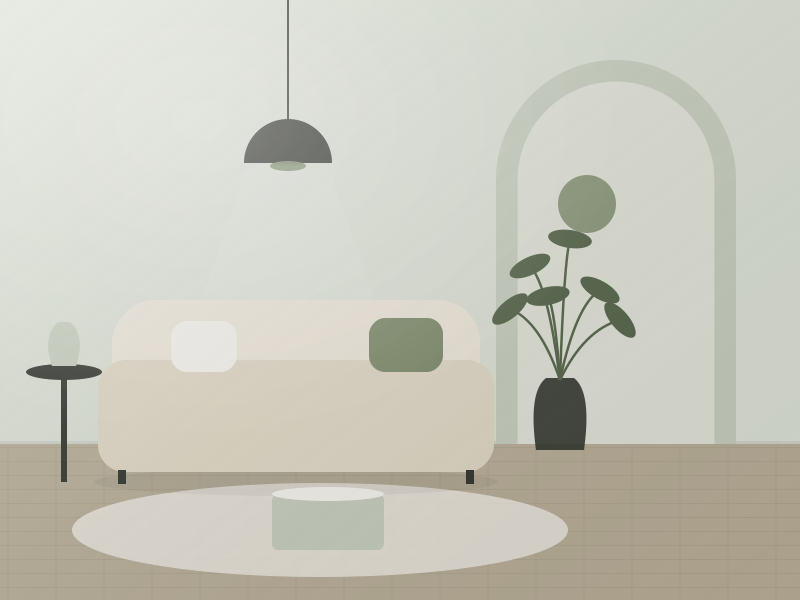
Pair a curved velvet sofa with two matching club chairs set symmetrically around a round marble or lacquer coffee table. Add a fluted cabinet or bar, a large geometric rug and a pair of brass floor lamps. Keep walls in a single rich color or a soft champagne with a fluted panel or wainscot detail.
Dining room
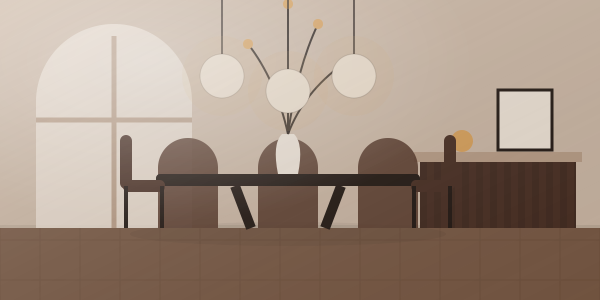
This is where Deco is at its best. A round or racetrack-shaped pedestal table, upholstered chairs or a curved banquette, a statement chandelier (bottom 75–85 cm / 30–34 in above the table) and walls in a deep lacquered or high-sheen paint. Add wall lights in pairs and a mirrored or fluted-glass sideboard to bounce candlelight. Allow 90 cm (36 in) behind chairs for circulation.
Bedroom
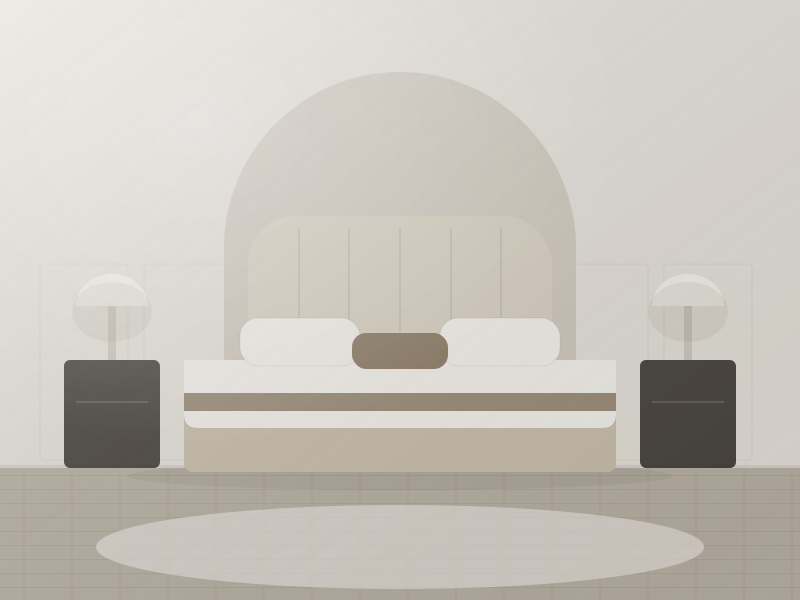
A tall upholstered headboard with channel tufting or a fan shape, mirrored or lacquered nightstands, pairs of glass-shaded lamps and a vanity with a round mirror. Satin-finish bedding in champagne or blush with a velvet throw keeps it soft rather than theatrical.
Bathroom
Black-and-white marble or geometric tile, a fluted vanity, round or arched mirrors with brass frames and wall lights at 1.5–1.7 m (60–67 in) either side of the mirror for even face lighting.
Hospitality and bars
Hotels, restaurants and bars are natural homes for the revival. Fluted bar fronts, brass foot rails, curved banquettes and backlit onyx-look panels create atmosphere quickly. For volume specification, see our hotel FF&E sourcing guide.
Common mistakes
- Too much gold. Brass on every surface looks cheap. Choose one metal finish and use it with intention.
- Literal motifs everywhere. Sunburst mirror, chevron rug, fan wallpaper and geometric cushions together read as a party theme. Choose one or two motifs and express the rest through form.
- Poor-quality gloss. Deco depends on crafted finishes. Thin lacquer, orange-peel texture and cheap plating show every flaw. Specify carefully or choose matte alternatives.
- Dark rooms without enough light. Deep colors need layered lighting — wall lights, lamps and a dimmable chandelier. See how to layer lighting.
- Ignoring comfort. Sculptural chairs must still be good to sit on. Test seat depth and height before ordering.
Deco in small doses
Not every home needs a full Deco room. A single fluted sideboard, a pair of glass-shaded wall lights, a velvet club chair or a black-and-white marble floor in a powder room can introduce the style to a modern or mid-century interior. Deco pairs particularly well with quiet luxury schemes, where its craftsmanship adds interest without breaking the calm.
The trick is to let one Deco element lead each space and keep everything around it simpler. A bold marble dining table works best with quiet chairs; a dramatic chandelier is strongest over a plain table. Treat the style as a seasoning rather than the whole meal and it will age well.
Shopping list
- Curved or channel-tufted velvet sofa in emerald, midnight or blush.
- Pair of velvet or leather club chairs.
- Round marble or lacquer pedestal coffee or dining table.
- Fluted sideboard or bar cabinet with brass pulls.
- Tiered or globe chandelier and matching pairs of wall lights.
- Sunburst, arched or fan-shaped brass mirror.
- Geometric wool rug sized with the rug size calculator.
- Black-and-white marble or geometric tile for a bathroom or entry.
- Glass-shaded table lamps and a velvet throw.
Our sourcing desk can collect factory quotes on brass lighting, lacquered case goods and velvet upholstery, and our e-design service can plan a Deco scheme around your existing furniture.
Free toolTile CalculatorWork out tiles, boxes, grout and adhesive with the right wastage.Shop & source the look
Buy it today — or have it made
Retail links are affiliate links: we may earn a commission at no extra cost to you (disclosure). “Get it made” sends the item to our sourcing desk for factory quotes in custom sizes and finishes.
Frequently asked questions
What are the key features of Art Deco interior design?
Bold geometry such as fluting, chevrons and sunbursts, symmetry, rich materials like lacquer, marble, velvet and brass, and a contrast of dark and light, matte and gloss.
What colors are Art Deco?
Deep jewel tones like emerald, midnight blue and oxblood, balanced by champagne, blush, black and white, with brass or gold accents.
How do I make Art Deco look modern?
Use Deco geometry in architecture and furniture forms, limit literal motifs, choose one metal finish and combine Deco pieces with simpler contemporary furniture.
Is Art Deco suitable for small spaces?
Yes. Mirrors, glossy finishes and a single deep color can make small rooms feel intentional and glamorous; powder rooms and entries are ideal places to start.
Some links may be affiliate links. Regulations and specifications change — always confirm with suppliers and qualified professionals.