Warm Minimalism 2027: The Guide to Soft, Textured Minimalist Interiors
How to design a minimalist home that feels calm rather than cold: the cream-and-clay palette, limewash and oak, curved low furniture, hidden storage, 2700K layered light and a room-by-room plan with budget tiers.
Key takeaways
- Keep the minimalist rule set but swap the materials: limewash, oak, linen, bouclé and travertine instead of white lacquer, glass and chrome.
- Palette is cream, oat, sand, clay and stone at 60/30/10, with umber as punctuation; no true white or black.
- Furniture sits low (seat 38–42 cm) and curves; storage is full-height and concealed; one object per surface.
- Light in layers at 2700K, CRI 90+, all dimmable — and in north light go one step warmer on walls and add lamps, not wattage.
Warm minimalism is what minimalism became once people had to live in it. The discipline is the same — fewer objects, clear surfaces, nothing without a purpose — but the materials have changed from white lacquer, glass and chrome to limewash, oak, linen and stone, and the geometry has softened from hard boxes to low curves. For 2027 it is the dominant residential look across the US, Europe and the Gulf, and the one most clients actually mean when they ask for "minimalist". This guide explains what separates it from the cold version, the exact palette and materials, the furniture proportions, the lighting recipe and how to apply it room by room at three budget levels.
Warm minimalism vs cold minimalism
The two share a rule set and differ in everything you can touch. The comparison below is the fastest way to audit a room you already have.
| Element | Cold minimalism (2000s–2010s) | Warm minimalism (2027) |
|---|---|---|
| Walls | Brilliant white emulsion, LRV 90+ | Limewash or matte paint in cream, oat or putty, LRV 70–82 |
| Floor | Polished concrete, gray tile, high-gloss white | Wide-plank oak, travertine, honed limestone, warm microcement |
| Furniture | Boxy, leather or lacquer, metal legs, high | Low, curved, bouclé or linen, timber or plinth bases |
| Metals | Chrome, polished stainless | Brushed brass, bronze, blackened steel, used sparingly |
| Light | Recessed downlights, 4000K | Layered lamps and indirect light, 2700K |
| Texture | Smooth, reflective | Matte, tactile, visibly handmade |
| Storage | Open shelving, display | Concealed, handle-less, full height |
The right-hand column is the whole method. Every decision that follows is a way of moving a room from left to right without adding objects. For the wider trend context see interior design trends 2027 and the living room trends 2027 report.
The palette: cream, oat, clay and stone
Warm minimalism uses perhaps five colors in a whole home, all of them drawn from undyed natural materials. Walls sit in the cream-to-oat range; floors and stone in sand and pale stone; clay and mushroom appear on upholstery and in ceramics; a single deep tone — bronze, umber or charcoal-brown — gives the eye somewhere to rest. There is no true white and no true black. Reflectance matters more than hue: a wall with LRV 75 in a warm white bounces enough daylight to feel bright while still reading as a color against a white ceiling.
#F1EAE0#E0D3BF#CDB8A0#B08968#A39B90#4A3F38Apply the ratio 60/30/10: cream and oat on 60% of visible surfaces (walls, ceiling, curtains), sand and stone on 30% (floor, sofa, large rug), clay on 10% (cushions, a chair, ceramics), with umber as the punctuation in a lamp base, a frame or a single piece of dark timber. Mix samples under your own windows at midday and at 8 pm with lamps on; a cream that reads warm in a showroom can turn pink or gray at home. Build and test combinations in Palette Studio or start from the 2027 color palettes.
Materials: limewash, oak, linen, bouclé, travertine
Texture does the work that pattern does in other styles, so every material should have a visible surface quality.
- Limewash and clay plaster. The signature wall finish: soft, cloudy variation with a chalky matte surface that absorbs rather than reflects light. Two coats over a mineral primer; expect 4–6 m² per liter per coat. Where budget or landlords rule it out, a dead-flat or matte emulsion in the same tone gets you 70% of the way.
- Oak. White oak or European oak with a natural, white-pigmented or light smoked oil. Floor planks 180–240 mm (7–9.5 in) wide; joinery in rift-cut or straight-grain veneer so the grain is quiet. Avoid orange stains and high-gloss lacquer. Walnut appears only as the "umber" accent. See how to mix wood tones.
- Linen. Heavy 300–400 gsm washed linen for curtains, hung from the ceiling in a wave or S-fold with 2–2.5× fullness; lighter linen for bedding and loose covers. Natural and oat colors, never bright white.
- Bouclé and wool. Looped bouclé on curved seating; flat wool or wool-linen blends on flat-backed pieces. For daily use specify 30,000+ Martindale rubs; for contract, 40,000+.
- Travertine and limestone. Filled, honed travertine or a tight-grained limestone for coffee tables, plinths, hearths and bathroom floors in 20–30 mm slabs. Porcelain versions are fine for wet rooms and high traffic; see tile trends 2027.
- Metals. Brushed brass, bronze or blackened steel, in small doses — a tap, a lamp stem, a picture frame. One metal per room; if you must combine, read how to mix metals.
Furniture: low, curved and grounded
The furniture of warm minimalism sits closer to the floor than conventional pieces and trades legs for plinths and curves. The lower center of gravity makes rooms feel calmer and ceilings taller.
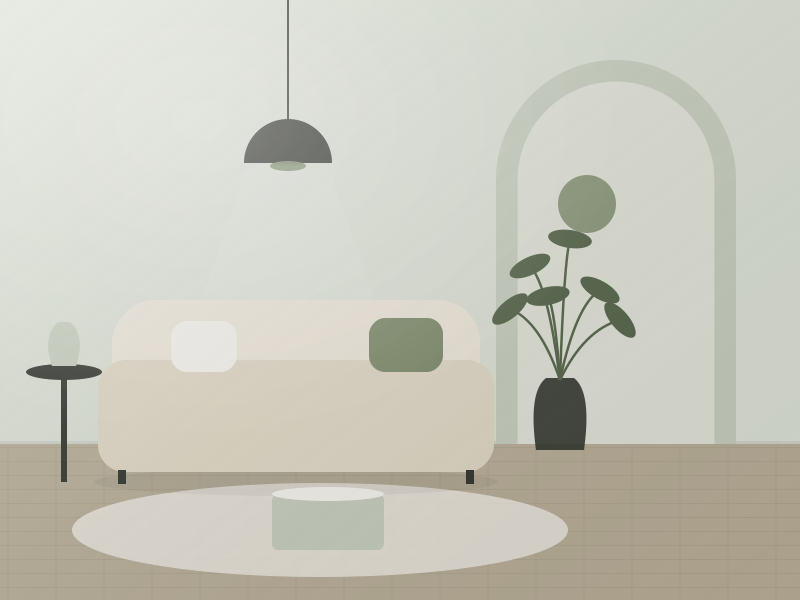
- Sofa: seat height 38–42 cm (15–16.5 in), seat depth 60–70 cm (24–27.5 in), back height 70–80 cm (27.5–31.5 in). Curved or gently bowed backs, rounded arms, a plinth or short timber legs under 10 cm (4 in). In an average living room a 240–280 cm (94–110 in) sofa plus one low chair does the job; size it with how to choose sofa size.
- Coffee table: a round or oval travertine or oak drum, 90–120 cm (36–48 in) across and 30–35 cm (12–14 in) high — deliberately lower than seat height — set 40–45 cm (16–18 in) from the sofa.
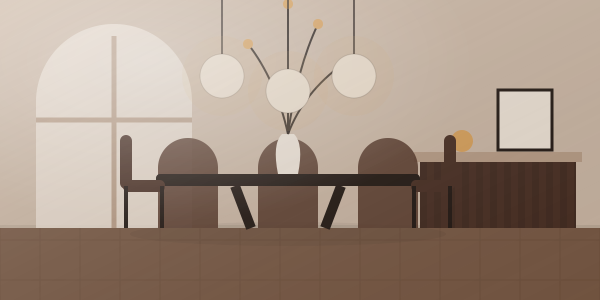
- Dining: a round or soft-oval oak or stone table on a pedestal base, 120–140 cm (48–55 in) for four to six; fully upholstered dining chairs in linen or bouclé, or curved oak chairs.
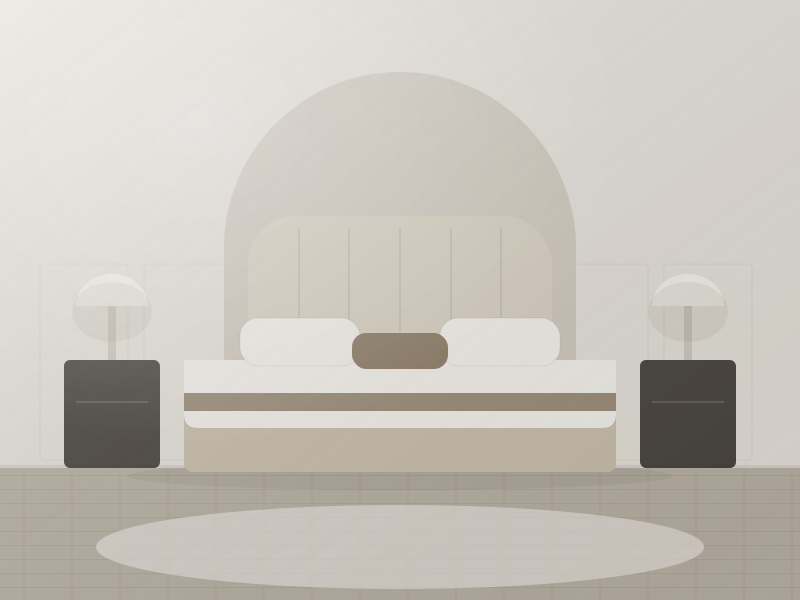
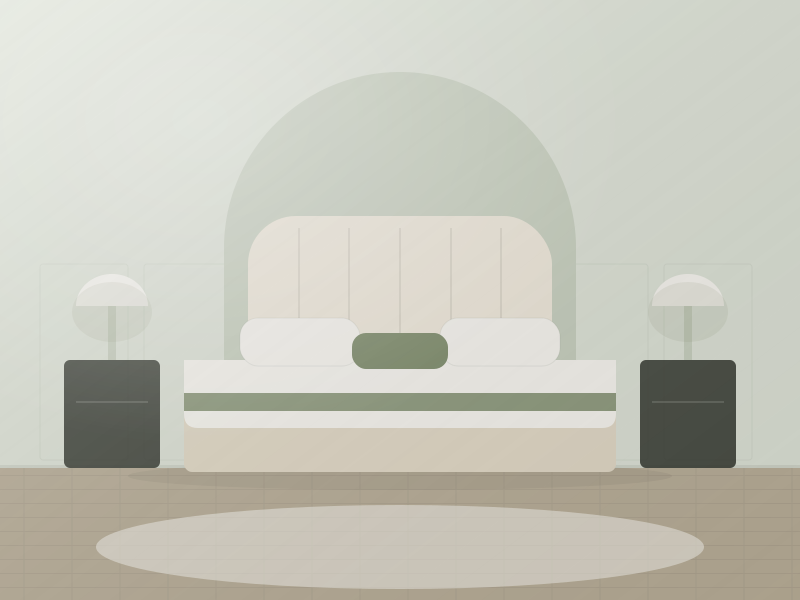
- Bed: a low upholstered platform bed, mattress top at 50–55 cm (20–22 in), headboard in linen or bouclé 100–120 cm (39–47 in) high, or a plinth bed on a limewashed base.
- Occasional pieces: a pebble-shaped ottoman, a plaster or stone plinth as a side table, one sculptural armchair. Nothing with visible hardware.
Resist filling corners. Warm minimalism needs 900 mm (36 in) clear circulation and empty floor around each group so the pieces read as objects in space.
Hidden storage and the one-object-per-surface rule
Minimalism fails at the storage stage. Warm minimalism succeeds because it hides more, not because its owners own less. Plan storage first, at 15–20% of floor area across the home, then furnish the remainder.
- Full-height, handle-less joinery finished to match the wall (limewash-toned laminate or painted MDF) or in quiet oak veneer, from floor to ceiling, with push-to-open or shadow-gap pulls. Depth 350–400 mm (14–16 in) in living rooms and halls; 600 mm (24 in) in bedrooms.
- Storage furniture with closed fronts: a plinth-based oak sideboard 45–50 cm (18–20 in) high, a bed with drawers, a bench with a lifting seat.
- A "landing zone" cabinet at the entry for keys, post and chargers so nothing arrives on the kitchen counter; the entryway guide has dimensions.
Then the rule that keeps the rooms looking as they did on the first day: one object per surface. A coffee table holds one bowl or one stack of books; a console holds one lamp or one vessel; a nightstand holds a lamp and nothing else; a kitchen counter holds one board. Group small objects into one tray so they count as one. Art is a single large piece per wall — 60–75% of the width of the furniture beneath — rather than a gallery. The rule sounds severe but is easy to keep because the hidden storage is where everything else lives.
Lighting: layered, indirect and 2700K
Cold minimalism relied on a grid of downlights, which flattens texture and makes cream walls look gray. Warm minimalism uses almost no direct overhead light in living spaces. The recipe:
- Color temperature: 2700K throughout living areas and bedrooms; 3000K maximum in kitchens and bathrooms. CRI 90+ so oak and linen render true. Put every circuit on a dimmer.
- Indirect ambient: LED strip in a cove, above joinery or behind a headboard, washing the ceiling or wall so the limewash glows. 300–500 lumens per meter of strip is plenty.
- Table and floor lamps: three to five per living room, with linen, paper, alabaster or plaster shades; 400–800 lumens each. Shades in cream or oat, never white.
- Task light: a discreet reading lamp or wall light with a 6–15 W directional source at the sofa and bedside.
- Accent: one narrow-beam spot on a sculptural object or textured wall to bring the material to life.
Total around 150–250 lumens per m² (15–25 per sq ft) in a living room from all layers combined, which feels generous once it is dimmable. Work it out with the lighting calculator and the method in how to layer lighting; lighting trends 2027 covers the plaster and alabaster fixtures that suit the look.
Keeping it warm in north light
North-facing and shaded rooms are where warm minimalism most often goes wrong: the cream turns gray, the oak turns muddy and the room feels dim rather than serene. Correct it in this order.
- Shift the wall color one step warmer and lighter. Choose a cream with a yellow-red undertone at LRV 78–82; avoid greige and anything with a green or blue base. Test in the room, on the north wall, at 10 am and 4 pm.
- Warm the floor. A natural-oiled or lightly smoked oak reads warmer than a whitened one under cool light. Add a wool rug in oat or camel to cover 60–70% of the seating area.
- Increase lamp count, not wattage. Five 400-lumen lamps at 2700K low in the room beat two bright ones; add a lit cove or uplight against the ceiling.
- Bring in more clay and umber. Raise the accent share from 10% to 15–20%: a clay chair, terracotta vessels, a walnut side table.
- Add reflective warmth, not glare. A large mirror in a brass or oak frame beside (not opposite) the window, and one brushed-brass lamp.
- Layer texture. Bouclé, wool and heavy linen absorb light softly and read warm; smooth surfaces under north light read cold.
Room by room
Living room
Limewash walls, oak floor, a 260 cm (102 in) curved bouclé sofa, one low armchair, a travertine drum table, a 240×340 cm (8×11 ft) wool rug, full-height concealed joinery on one wall, four lamps and a single large artwork. Curtains in oat linen from ceiling to floor.
Bedroom
A low upholstered bed, linen bedding in oat over a cream fitted sheet, two wall-mounted reading lights, a plaster or oak nightstand each side with one lamp, a wool rug extending 60 cm (24 in) beyond the bed and blackout-lined sheer curtains. Wardrobes concealed behind wall-color doors.
Kitchen
Handle-less fronts in oat-toned matte laminate or slim-frame oak, a honed limestone or warm quartz worktop with a 20 mm edge, a single run of open shelf with three ceramic pieces, under-cabinet LED at 3000K and one plaster pendant over the island at 75–85 cm (30–34 in) above the counter. Appliances integrated. See kitchen trends 2027.
Bathroom
Large-format travertine-look porcelain floor to ceiling, a wall-hung oak vanity with a solid stone top, brushed brass or bronze fittings, a linen curtain or fluted glass for privacy, and one plaster wall light each side of the mirror at 2700K.
Entry and hall
A concealed cabinet for coats and shoes, a low oak bench, a single round mirror and a runner in undyed wool. One vessel on the bench, nothing else.
Budget tiers
| Element | Entry | Mid | Premium |
|---|---|---|---|
| Walls | Dead-flat cream emulsion | Limewash on feature walls, matte emulsion elsewhere | Clay plaster or limewash throughout |
| Floor | Oak-look LVT or laminate + wool rug | Engineered oak, 190 mm plank, oiled | Solid or engineered oak 220–240 mm; travertine in wet rooms |
| Sofa | Curved sofa in polyester bouclé, 25,000 rubs | Wool-blend bouclé, 35 kg/m³ foam, 30,000 rubs | Wool bouclé, feather-wrapped cushions, kiln-dried hardwood frame |
| Coffee table | Oak-veneer drum | Travertine-look porcelain on a plinth | Solid honed travertine, 30 mm top |
| Storage | Freestanding closed sideboard | Semi-fitted wardrobes, painted MDF, push-open | Bespoke floor-to-ceiling joinery matched to wall |
| Lighting | Three lamps, 2700K bulbs, plug-in dimmers | Five lamps + LED cove, wired dimmers | Plaster and alabaster fixtures, scene-set dimming |
| Curtains | Ready-made linen-look, ceiling track | Made-to-measure washed linen, 2× fullness | Heavy linen, S-fold, 2.5× fullness, motorized |
Spend first on the sofa and the floor covering — they are the largest warm surfaces — then on curtains and lamps. Wall finish is the most visible upgrade per dollar after that.
Neighboring styles
Warm minimalism sits between three related looks. Japandi shares the low furniture and restraint but uses more contrast — dark timber, ink accents — and a Japanese sense of asymmetry. Quiet luxury uses the same palette with richer materials (cashmere, marble, bronze) and more pieces per room. Organic modern is warmer still and more sculptural, with plaster forms, more curves and more plants. If you cannot decide, the style quiz places you on the spectrum.
To build the scheme quickly, our store carries a warm-neutral palette pack with tested cream, oat and clay combinations, and the e-design service can plan the joinery, lighting layers and furniture sizes for your room.
Free toolTile CalculatorWork out tiles, boxes, grout and adhesive with the right wastage.Shop & source the look
Buy it today — or have it made
Retail links are affiliate links: we may earn a commission at no extra cost to you (disclosure). “Get it made” sends the item to our sourcing desk for factory quotes in custom sizes and finishes.
Frequently asked questions
What is warm minimalism?
A minimalist approach — few objects, clear surfaces, concealed storage — executed in warm natural materials such as limewash, oak, linen, bouclé and travertine, with a cream-to-clay palette, low curved furniture and layered 2700K lighting instead of white, glass, chrome and downlights.
What colors are used in warm minimalism?
Cream and oat on walls, sand and pale stone on floors and large upholstery, clay or mushroom as the accent and a single deep umber or bronze for punctuation. There is no pure white or black, and walls usually sit around LRV 70–82.
How do I make minimalism feel less cold?
Replace reflective surfaces with matte, textured ones (limewash, oiled oak, wool, linen), lower the furniture and add curves, switch to 2700K lamps at low level instead of overhead downlights, and hide storage behind full-height wall-colored doors so surfaces stay clear without looking empty.
Is warm minimalism the same as Japandi?
They overlap. Japandi adds Japanese elements — dark or charred timber, ink-black accents, asymmetry and craft objects — while warm minimalism stays lighter, softer and more tonal, with bouclé, travertine and curved forms. Many rooms sit somewhere between the two.
Some links may be affiliate links. Regulations and specifications change — always confirm with suppliers and qualified professionals.