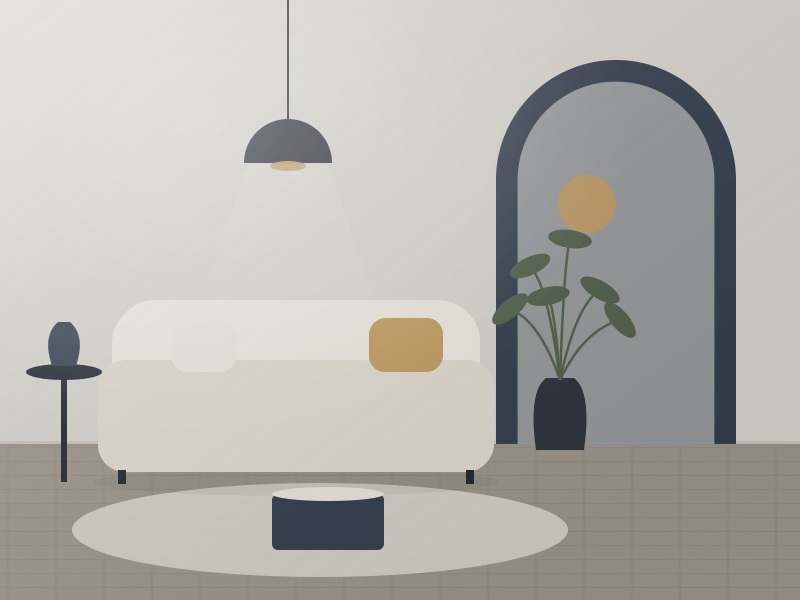
How to Layer Lighting Like a Designer
Ambient, task, accent and decorative light — plus colour temperature, CRI and fixture choices for residential and hospitality spaces.
Read storyFree tool
Get total lumens, the number of fixtures, a layered lighting plan and the right color temperature for any room.
How it works
We start from a target illuminance (lux, or foot-candles) for each room — for example about 100–150 lux of general light for living rooms and bedrooms, and 300 lux or more for kitchens and home offices — multiply by floor area and add allowance for real-world losses to get total lumens.
That total is then split into three layers — ambient, task and accent — so a room is never lit by ceiling lights alone. Color temperature and CRI suggestions follow the room’s use: warm 2700K for relaxing spaces, 3000K for kitchens and bathrooms, CRI 90+ everywhere.
More in our guide to layering light.
FAQ
As a rough guide, 10–20 lumens per square foot (about 100–200 per m²) of combined light, split between ambient, task and accent sources, and always on dimmers.
2700K for living rooms, bedrooms and dining; 3000K for kitchens, bathrooms and work areas. Keep one temperature per room so lamps and ceiling lights match.
Color Rendering Index measures how faithfully light shows colors. Choose CRI 90 or higher at home so wood, skin tones and paint look right.
Keep reading
Ambient, task, accent and decorative light — plus colour temperature, CRI and fixture choices for residential and hospitality spaces.
Read storyA home office that looks good on camera and works for eight hours: desk and monitor dimensions, lighting for video calls, storage that hides paper and cables, and acoustic fixes that help.
Read storyOxblood walls, round and oval tables, sculptural pendants and banquette seating: the dining room trends for 2027, plus table sizing and pendant height rules to get the plan right.
Read storyThe Trend Letter
Free. No spam. Unsubscribe in one click.