Lighting Trends 2027: Sculptural Fixtures, Warm-Dim LEDs and Specs
Plaster and alabaster sculptures, oversized paper pendants, plug-in sconces and warm-dim LEDs that fade to candlelight: the lighting directions for 2027, with the lumens, Kelvin and CRI numbers to specify them properly.
Key takeaways
- Specify 2700K as the default and warm-dim to 1800K for evening rooms
- Insist on CRI 90+ and R9 above 50 so warm palettes do not turn gray
- Bring light down to eye level with plug-in sconces at 55–65 in (140–165 cm)
- Sample every fixture and dimmer pair at 10 percent before ordering the run
Lighting is the part of a room people feel before they see it. In 2027 the fixtures themselves are getting softer, larger and more sculptural, while the technology inside them is getting quieter: warm-dim LEDs that slide from a clean 3000K to a candlelit 1800K, dimming that no longer needs a hub, and rechargeable lamps that go wherever the evening goes. Below are the trends worth planning around, followed by the specification numbers that make them work in a real room.
1. Sculptural plaster and alabaster
The defining fixture of 2027 is matte, pale and hand-finished. Plaster pendants and wall lights in chalky white, bone and putty read as small pieces of architecture rather than decoration, and alabaster, either genuine stone or a convincing resin composite, brings a veined, translucent glow that flatters every warm palette. The forms are simple: shallow domes, folded shells, half-cylinders and stacked discs. What sells them is the way light grazes a textured surface rather than the fixture shouting for attention.
Plaster is porous and marks easily, so in kitchens and baths ask for a sealed or gesso-finished version. Genuine alabaster varies in veining from piece to piece; if you are ordering a run of six sconces for a corridor, ask the factory to photograph the stone before cutting. Weight matters too. A 20 in (50 cm) plaster dome can weigh 15–25 lb (7–11 kg), which rules out a standard ceiling box in some markets and calls for a rated hook or a joist fixing.
How to use it: one large plaster or alabaster pendant over a dining table, or a pair of wall lights flanking a bed, and keep the surrounding surfaces matte so the fixture stays the softest thing in the room.
2. Oversized paper and fabric pendants
The Japanese paper lantern has grown up. Pleated rice paper, washi-look polyester and gathered linen pendants now come at 24–40 in (60–100 cm) diameters and are being used in living rooms and bedrooms the way a chandelier once was: as a single, cloud-like volume that fills the upper third of the room. Because the shade diffuses in every direction, one 2700K lamp inside gives a gentle ambient wash that is easier to live with than a downlight grid.
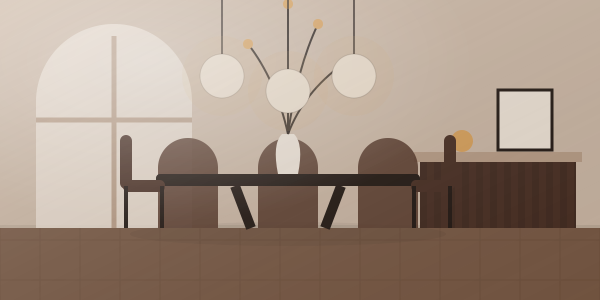
Scale is the whole point, so do not undersize. Over a dining table the pendant can be about half to two-thirds the table width; in an open living space, aim for a diameter of roughly 1/12 of the room's diagonal in inches (so a 20 × 16 ft room, with a 25 ft diagonal, takes a fixture around 25 in, or 64 cm). Hang the bottom of a dining pendant 30–36 in (75–90 cm) above the table top. Fabric shades in hospitality projects need a fire-retardant certificate; ask for the test standard in writing.
3. Low wall lights and plug-in sconces
Light is coming down off the ceiling. The 2027 room puts its brightness at seated eye level: low-slung wall lights beside sofas, sconces at 55–65 in (140–165 cm) above the floor beside a bed, picture lights over consoles and small reading lights on swing arms. The result is a room where faces are lit from the side, not from above, and shadows fall softly.
The practical hero here is the plug-in sconce. A hardwired wall light needs a cable in the wall; a plug-in version with a fabric-covered cord and an inline dimmer can be fitted to a rental or a finished room in twenty minutes. Designers are no longer hiding the cord; a neat vertical drop in a color that matches the wall, or a contrasting cotton braid, is part of the look. Where you can chase a cable, place the outlet or the box at 60 in (150 cm) for a general sconce and 44–48 in (112–122 cm) for a bedside reading light, so the bottom of the shade sits just above a seated or propped-up head. Our guide to how to layer lighting covers placement room by room.
4. Warm-dim LEDs and the return of the 1800K evening
The single biggest technical shift is warm-dim, sometimes called dim-to-warm. As the lamp dims, its color temperature drops the way an incandescent bulb once did: full brightness at around 3000K or 2700K, sliding down to 1800–2000K at 5–10 percent. The room goes from bright and useful at dinner-prep time to a candlelit glow after dinner, using the same fixtures. The 2027 default for living spaces, bedrooms and hospitality is 2700K as the top of the range, with 1800K at the bottom.
Warm-dim is built into the LED module, not the bulb, so it needs to be specified at the fixture. Check three things: the CCT range (2700K to 1800K is the useful one; 3000K to 2200K is acceptable in kitchens), the dimmer compatibility list, and the CRI. Insist on CRI 90 or higher, and if a supplier can quote R9 (the red-rendering value), ask for R9 above 50; it is what makes skin, wood and terracotta look alive instead of gray. A cheap warm-dim strip with CRI 80 will make a cocoa sofa look muddy at 1800K. For the wider palette conversation see 2027 color palettes.
#FFB46B#FFC98A#FFD9A8#FFE4C0#FFF1E05. Layered scenes and dimming without a hub
Smart lighting has spent a decade asking homeowners to install a hub, an app and a subscription. The direction for 2027 is hubless: Bluetooth-mesh or Thread-based lamps and dimmer switches that pair directly with a phone or a wall keypad, and that still work as ordinary dimmers when the phone is elsewhere. The lighting scenes that matter are few: bright for cleaning and cooking, medium for everyday, low and warm for evening, and a path light for night. Program those four and stop.
- Circuit by layer, not by room. Ambient (ceiling or cove), task (reading and work lights) and accent (art, shelves, table lamps) each get their own dimmer. Three dimmers in a living room is normal; five is generous.
- Use smart switches over smart bulbs wherever a fixture is hardwired. Bulbs get replaced; the wiring stays.
- Trailing-edge or ELV dimmers for LEDs. Leading-edge dimmers designed for incandescent loads cause flicker and buzz with small LED loads.
- Table lamps on smart plugs so they join the scene without new wiring.
6. Portable rechargeable lamps
The cordless table lamp has become the single most requested item from hotel and restaurant operators, and homeowners are following. A rechargeable lamp with a 10–14 in (25–35 cm) height, 8–20 hours of runtime and a USB-C or contact-charging base can sit on a dining table, move to the terrace and finish the night on a bedside table. The best versions have a three-step touch dimmer, a warm 2200–2700K LED and an IP44 rating so a spilled glass or light rain does not matter.
For hospitality buyers, ask about battery certification (UN38.3 for air shipping), replaceable cells, a charging tray that holds four to six lamps, and a matte finish that hides fingerprints. Runtime figures are usually quoted at the lowest setting; halve them for a realistic dinner-service estimate at medium brightness.
7. Fluted glass, brass and bronze
Ribbed and fluted glass is everywhere in 2027: on pendants, sconces, flush mounts and cabinet lighting. The vertical ribs scatter light gently, hide the LED source and pair naturally with the reeded joinery that is running through kitchens. Finishes have warmed. Polished chrome is a supporting role; brushed brass, unlacquered brass that patinates, oil-rubbed bronze and a dark gunmetal carry the season. Mixing two metals in one room works if you keep one dominant and repeat the second at least three times; see how to mix metals.
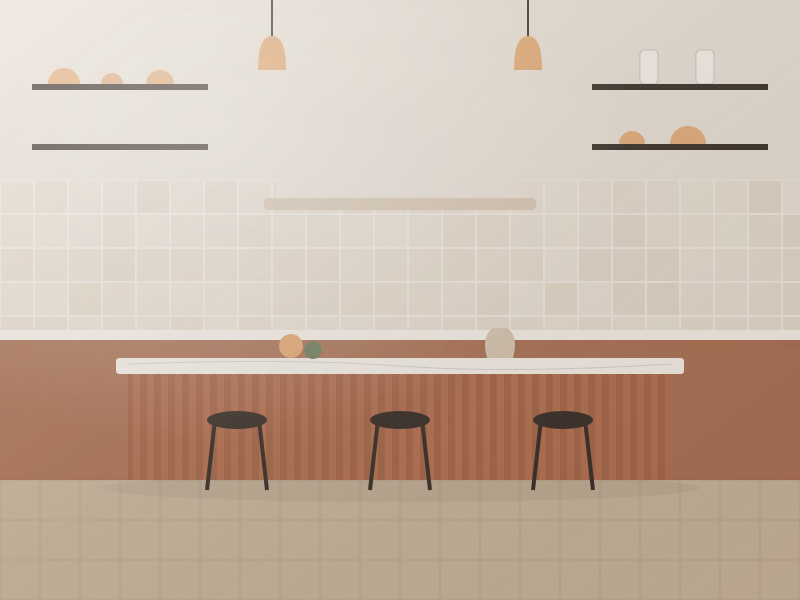
Over a kitchen island, the trio of small pendants is giving way to a single linear fixture: a bar of fluted glass, a plaster trough or a slim brass tube 36–60 in (90–150 cm) long, hung 30–36 in (75–90 cm) above the counter and sized to about two-thirds of the island length. It lights the whole work surface evenly and leaves the sight line across the kitchen open. Dimensions for the island itself are in our kitchen island size guide.
8. Bathroom and mirror lighting done properly
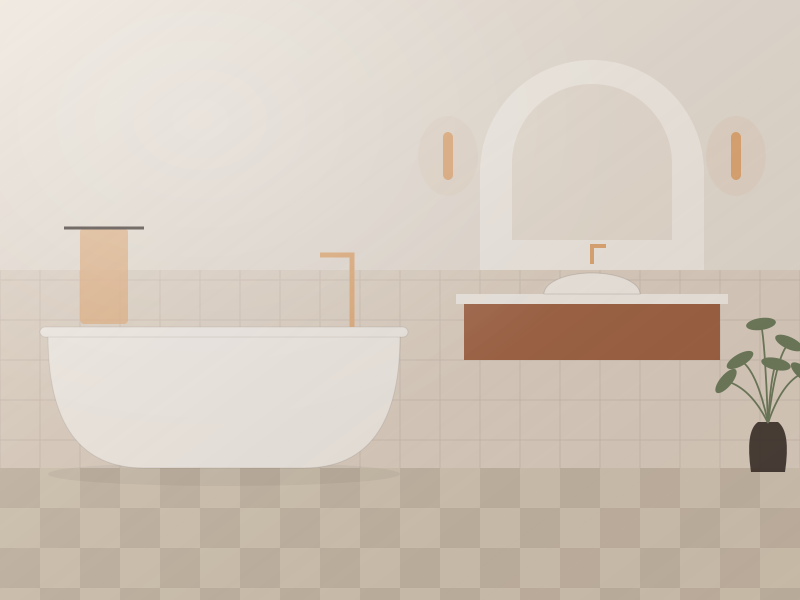
The mistake almost every bathroom makes is a single downlight above the mirror, which lights the top of the head and throws the face into shadow. The 2027 bathroom lights the face from the sides: two sconces at roughly 60–66 in (150–168 cm) above the floor, spaced 28–36 in (70–90 cm) apart around the mirror, or a backlit mirror with a 2700–3000K, CRI 90+ perimeter. Add a warm, low night circuit, either an LED strip under the vanity or a shelf glow at 2200K, on a motion sensor for 3 a.m. trips.
Wet areas need ingress protection. In most codes the zone directly above a bath or inside a shower requires IP65 or better; the area within about 24 in (60 cm) of the bath or basin edge calls for IP44; the rest of the room can take standard fixtures. Fluted glass sconces with sealed lamp holders are widely available at IP44, which is why they have become the default bathroom light this season. If you are choosing tile at the same time, tile trends 2027 covers the surfaces the light will bounce off.
9. The specification table: lumens, Kelvin, CRI and dimming
These are working figures for residential and light hospitality spaces. Lumens are the total delivered to the room from all layers; halve the ambient figure if you rely heavily on table and floor lamps, and use our lighting calculator to turn them into a fixture count.
| Room | Lumens per m² (per sq ft) | CCT | CRI | Dimming |
|---|---|---|---|---|
| Living room | 100–200 (10–20) | 2700K, warm-dim to 1800K | 90+ | 3 circuits: ambient, task, accent |
| Dining room | 100–150 (10–15) | 2700K, warm-dim to 1800K | 90+ | Pendant and accent on separate dimmers |
| Kitchen (general) | 300–400 (30–40) | 3000K, warm-dim to 2200K | 90+ | Ambient, island, under-cabinet |
| Kitchen (counter task) | 500–750 (50–70) at counter | 3000K | 90+ | Under-cabinet strip, dimmable |
| Bedroom | 100–150 (10–15) | 2700K, warm-dim to 1800K | 90+ | Ceiling and bedside on separate dimmers |
| Bathroom (general) | 200–300 (20–30) | 2700–3000K | 90+ | Mirror, ambient, night circuit |
| Bathroom (mirror face lighting) | 400–500 (40–50) at face | 2700–3000K | 95 preferred | Dimmable, IP44 |
| Home office | 300–500 (30–50) | 3000–3500K | 90+ | Task lamp separate from ambient |
| Hallway and stairs | 100–150 (10–15) | 2700K | 80+ | Night level 10–20 percent |
| Hotel guest room | 100–150 (10–15) | 2700K, warm-dim to 2200K | 90+ | Master off, scene keypad at door and bedside |
Two habits will save you from most lighting regret. First, buy one sample of every fixture, lamp and dimmer combination and run it at 10 percent in a dark room before ordering the rest; flicker and color shift only show at low levels. Second, specify the driver and the dimmer together; mismatched pairs are the cause of most "smart" lighting that buzzes, drops out or refuses to go low.
10. Sourcing lighting from Zhongshan Guzhen
Almost every decorative fixture sold in the West, at every price point, passes through the Zhongshan lighting cluster in Guangdong. Buying from it directly makes sense above roughly 30–50 fixtures, or for a hospitality project where a run of matched sconces is needed. The pitfalls are certification and consistency, and both are manageable with a written specification.
- Certification: UL or ETL listing for the US and Canada, CE and UKCA marking with LVD and EMC test reports for Europe and the UK, and RoHS for materials. Ask for the certificate number and check it, not just the logo on the box.
- Spec sheet items: CCT and tolerance (3-step MacAdam ellipse is good, 5-step is common), CRI and R9, lumen output at the fixture, driver type and dimming protocol, IP rating, finish sample and packing method.
- MOQs and pricing: decorative pendants often start at 20–50 pieces per design; plaster and alabaster pieces at 10–20. Ex-works or FOB Shenzhen prices for a mid-quality fluted glass pendant sit in the low tens of dollars; a large plaster dome in the low hundreds. Freight, duty and certification testing can add 30–50 percent.
- Lead time: 30–45 days for stock designs, 60–75 for custom finishes, plus 30–40 days sea freight.
If you are lighting a whole house, a restaurant or a hotel corridor and would rather not manage factories directly, our sourcing desk gathers quotes against a written lighting schedule, checks certificates and arranges samples; start with the lighting calculator to size each room, then send us the schedule.
Free toolTile CalculatorWork out tiles, boxes, grout and adhesive with the right wastage.Shop & source the look
Buy it today — or have it made
Retail links are affiliate links: we may earn a commission at no extra cost to you (disclosure). “Get it made” sends the item to our sourcing desk for factory quotes in custom sizes and finishes.
Frequently asked questions
What color temperature will be most popular in 2027?
2700K remains the default for living spaces and bedrooms, but the real trend is warm-dim LEDs that slide from 2700K or 3000K down to 1800K as they dim, giving a candlelit glow from the same fixture. Kitchens and offices sit at 3000–3500K.
Does CRI really matter for home lighting?
Yes. CRI measures how accurately a light shows color. Below 90, warm woods, terracotta and skin look dull and slightly gray, especially at low levels. Specify CRI 90 or higher and, where quoted, an R9 red-rendering value above 50.
How high should wall sconces be mounted?
For general wall lights, center them at 60–66 in (150–168 cm) above the floor. Bedside reading sconces sit lower, with the light source around 44–48 in (112–122 cm), just above a propped-up head. Beside a mirror, mount at eye level, 60–66 in.
What IP rating do bathroom lights need?
Fixtures directly over a bath or inside a shower generally need IP65. Within about 24 in (60 cm) of a bath or basin, IP44 is the usual minimum. Elsewhere in the bathroom standard fixtures are acceptable, though IP44 is a sensible default for sconces.
Some links may be affiliate links. Regulations and specifications change — always confirm with suppliers and qualified professionals.