Travertine, Bouclé, Rattan and Microcement: A Guide to Trending Materials
What each material looks like, where it works, how to care for it and what to check before you buy.
Key takeaways
- Tactility is the common thread across trending materials.
- Each material has trade-offs — know them before specifying.
- Ask for test reports for your market: fire, emissions, abrasion.
- Approve samples from the actual batch or block.
The materials behind today's most photographed interiors share one quality: tactility. Here is a practical guide to the ones clients ask for most, with the trade-offs designers should know, the specifications to put in writing and the questions to ask a supplier before you order.
Trending materials carry a particular risk: demand pulls in suppliers of very different quality, and the photograph that sold the client on travertine or bouclé rarely shows how it will look after two years of use. The table gives a quick comparison; the sections that follow explain what separates a good specification from a disappointing one.
At a glance
| Material | Best for | Watch out for | Care |
|---|---|---|---|
| Travertine | Coffee tables, lamp bases, bathroom walls | Porous; acidic spills can etch | Seal regularly; pH-neutral cleaner |
| Bouclé | Accent chairs, headboards, sofas | Loops can snag; light colors show dirt | Vacuum; spot-clean; check rub count |
| Rattan & cane | Chairs, cabinet doors, pendants | Can dry and crack in very dry air | Dust; wipe with damp cloth |
| Microcement | Seamless floors, walls, showers | Needs skilled installers; hairline cracks on moving substrates | Wax or sealer; avoid harsh chemicals |
| Fluted wood | Kitchen islands, wardrobes, wall panels | Dust collects in grooves | Soft brush; wipe along the grain |
| Terrazzo | Floors, tabletops, bathroom surfaces | Heavy; cement-based versions are porous | Seal; neutral cleaner |
| Limewash & lime plaster | Walls, range hoods, feature ceilings | Marks in high-traffic areas; needs breathable substrate | Touch up; avoid scrubbing |
Travertine
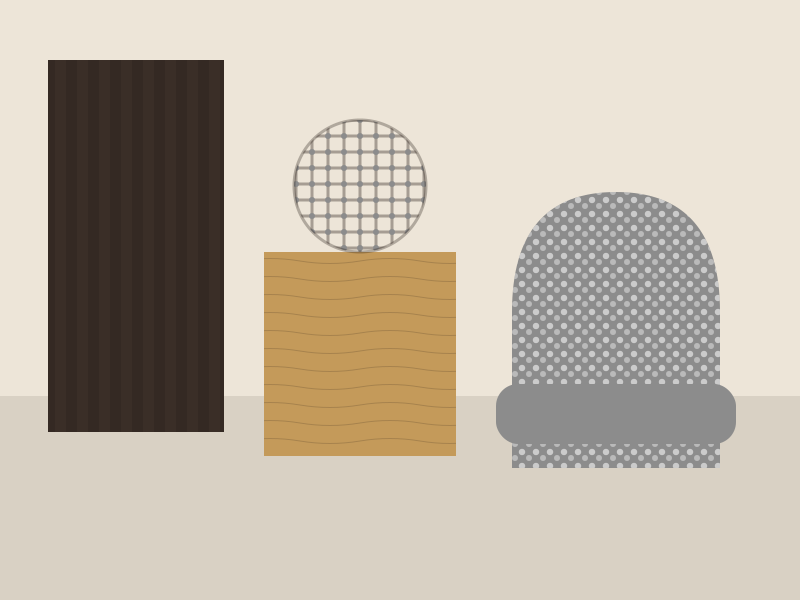
A sedimentary stone with a warm, creamy tone and natural pores. Filled travertine has pores filled with resin or cement for a smoother surface; unfilled keeps the raw, textured look. Ask whether the stone is cut "vein-cut" (linear, striped pattern) or "cross-cut" (cloudy, more uniform pattern) — the same block looks completely different depending on the direction of the cut.
Where it works: coffee and side tables, lamp bases, bathroom walls, shower surrounds with a filled and sealed finish, and cladding. It is a calcium-based stone, relatively soft, and etches with acids — which is why it is better on a coffee table than a kitchen worktop. Honed and brushed finishes are the current look and disguise wear better than polished.
What to specify: color grade (ivory, classic, silver, walnut, red), filled or unfilled, finish, thickness and edge detail. For furniture, a top of around 3/4–1 1/4 in / 20–30 mm is typical. Ask for photos of the actual slabs, and for large tables, check the weight: solid stone tops can be difficult to move and may need a floor check on upper levels. Pitfall: unfilled travertine traps crumbs and liquids. Use it for decorative surfaces; choose filled for anything that is wiped daily.
Bouclé
A fabric made from looped yarn, giving a nubby, sheep-like texture. Quality varies widely, from dense wool and wool-blend bouclés to loosely looped polyester versions that pill and snag quickly.
What to specify: for furniture that gets daily use, ask for the Martindale rub count (as a rough guide, many specifiers look for 20,000+ for domestic seating and higher for contract use) or, in the US, the Wyzenbeek double-rub result. Ask for fiber composition, weight per square meter or yard, pilling test results and a flammability certificate for your market — for example TB 117-2013 for US residential upholstery, the UK furniture fire safety regulations, or EN 1021 for contract seating in Europe. Contract projects may require additional tests.
Where it works: accent chairs, headboards, ottomans and occasional sofas. For family sofas and pets, a tighter, flatter bouclé or a performance fabric is more practical. Pitfall: large, loose loops catch on jewelry, zips and claws. Ask for a physical sample, rub it hard with a key or a Velcro strip, and see how it recovers.
Rattan and cane
Rattan is a climbing palm; cane is the thin outer skin, often woven into webbing. Natural rattan is flexible and light. For outdoor use, specify synthetic (PE) rattan instead — natural rattan is for interiors.
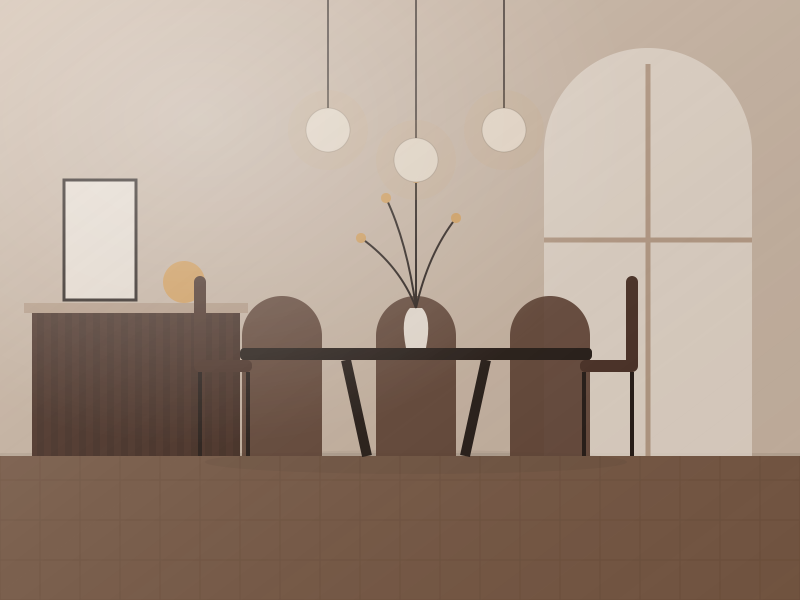
Where it works: dining chairs, cabinet doors, headboards, pendants and screens. Pre-woven cane webbing inserted into timber frames is the most common way to use it in cabinetry. It suits the Japandi, Mediterranean and organic modern directions especially well.
What to specify: for natural rattan, ask about the frame (solid rattan poles versus steel frames wrapped in rattan), the binding method and the finish. For outdoor PE rattan, ask for UV-stabilized fiber and powder-coated aluminum frames, which do not rust. For cane doors, ask whether the webbing is replaceable. Pitfall: natural cane can sag and split in very dry, heated interiors. Keep it away from radiators and consider a light humidity check in winter.
Microcement
A thin cement-polymer coating applied in layers to create seamless surfaces, typically only a few millimeters thick. It can go over floors, walls, stairs and showers, including over existing tiles in some cases. The finish depends almost entirely on the installer, so ask for references and sample boards.
What to specify: a stable, rigid substrate — movement from timber floors or underfloor heating that is not properly commissioned is the main cause of cracks; a primer and mesh reinforcement; the number of coats; and a sealer suited to the location, usually polyurethane for floors and wet areas. In showers, a waterproof membrane is still required underneath. Specify the texture (smooth, soft cloud or more pronounced trowel marks) with a physical sample board.
Pitfall: microcement will show hairline cracks where the substrate moves, such as board joints and structural movement joints. Ask the installer how movement joints will be handled and accept that fine surface variation is part of the material. Our bathroom trends article covers wet-room details.
Fluted wood
Parallel grooves routed into solid wood or MDF. Solid wood fluting is more durable at edges; painted MDF is more stable for large panels.
What to specify: the profile (half-round, square or V-groove), the flute width and the spacing — narrow reeds around 3/8 in / 10 mm look refined, wider flutes of 3/4–1 in / 20–25 mm look more classical. For veneered panels, confirm that the grooves are cut before veneering, or that the veneer is thick enough to survive routing. For MDF and other panel products, ask for formaldehyde emission compliance for your market (for example CARB Phase 2 / TSCA Title VI in the US, or E1 in Europe).
Pitfall: grooves collect dust and grease, and lacquer builds up in them unevenly if sprayed poorly. Approve a finished sample door, not just a raw profile.
Terrazzo and lime plaster
Terrazzo is made from chips of marble, glass or stone set in a binder. Cement-based terrazzo is traditional, thick and porous, so it needs sealing. Epoxy terrazzo is thinner, less porous and offers brighter colors, but is generally for interior use. Precast terrazzo tiles and slabs are easier to install than poured floors. Specify chip size (fine, medium or large), binder color and the finish, and ask for a sample from the actual mix.
Lime plaster and limewash give walls the soft, cloudy movement associated with warm minimalism. They are breathable and work best on mineral substrates; over modern paint or plasterboard, a suitable primer is needed. Limewash is thin and marks easily in hallways, so consider a more durable mineral paint at hand height. Pitfall: results vary with the applicator's technique — approve a sample area on site before the whole room is done.
Choosing materials by room
The same material can be a good or bad choice depending on where it goes, so match it to the conditions rather than the mood board.
- Living rooms: the most forgiving space. Unfilled travertine, bouclé, cane and lime plaster all work here, because they are touched but rarely soaked. Put the most delicate textures on occasional pieces and a tougher fabric on the main sofa.
- Kitchens: heat, grease and acids rule out soft, porous stones for worktops. Use travertine or marble for a splashback or open shelf, fluted timber on the island away from the cooktop, and sealed, easy-wipe finishes near food preparation.
- Bathrooms: filled and sealed travertine, porcelain, epoxy or sealed cement terrazzo and properly installed microcement are suitable. Keep natural cane and unsealed timber away from splash zones, and ventilate well to protect everything else.
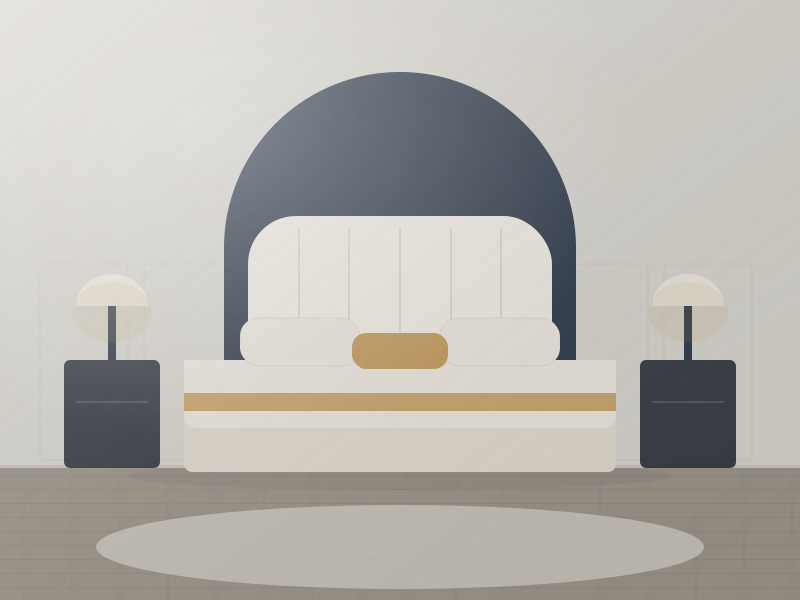
- Bedrooms: ideal for bouclé headboards, cane-fronted wardrobes and limewashed walls, where wear is light and texture is appreciated up close.
- Hospitality and contract: choose the durable version of each look — tight contract-rated bouclé, filled stone, PE rattan outside, lacquered or PVD metal — and confirm the fire and abrasion certificates the project requires.
Buying checklist
- Samples: request physical samples of the exact batch or block, and keep a signed-off master for comparison with bulk deliveries.
- Test reports: ask for reports relevant to your market — fire, emissions, abrasion, slip resistance — and check the company and product names match your order.
- Tolerances: confirm size tolerance, color variation, finish and packaging before production.
- Care: get written care instructions and pass them to the client or operations team.
- Consistency: for natural materials, order the whole quantity at once from one batch where possible.
For more on putting these materials together, see how to mix wood tones and our 2027 trends overview. If you are ordering direct from manufacturers, our sourcing guide explains samples, inspections and shipping.
Free toolTile CalculatorWork out tiles, boxes, grout and adhesive with the right wastage.Shop & source the look
Buy it today — or have it made
Retail links are affiliate links: we may earn a commission at no extra cost to you (disclosure). “Get it made” sends the item to our sourcing desk for factory quotes in custom sizes and finishes.
Frequently asked questions
Is travertine good for a coffee table?
Yes. Travertine suits coffee tables well, but it is porous and etches with acids, so choose a filled, sealed finish for easy cleaning and use coasters.
What rub count should bouclé have for a sofa?
As a rough guide, many specifiers look for a Martindale result of 20,000 or more for domestic seating and higher for contract use, plus a flammability certificate for your market.
Can natural rattan be used outdoors?
Natural rattan is intended for interiors. For outdoor furniture, specify UV-stabilized synthetic PE rattan on powder-coated aluminum frames.
Why does microcement crack?
Most cracks come from movement in the substrate, such as flexing timber floors or board joints. A rigid, stable base, reinforcement mesh and a skilled installer reduce the risk.
Some links may be affiliate links. Regulations and specifications change — always confirm with suppliers and qualified professionals.