Bedroom Trends 2027: Calm Colors, Upholstered Beds and Sizing Rules
Upholstered headboards, clay and plaster tones, blackout layers and hotel-style lighting: the bedroom trends for 2027, with bed, rug and nightstand sizing you can plan around.
Key takeaways
- Choose a headboard 50–60 in (127–152 cm) tall to anchor the room
- Extend the rug 18–24 in (45–60 cm) beyond each side of the bed
- Keep nightstands within 2 in (5 cm) of the mattress top
- Mount curtains high and wide with blackout lining for real darkness
Bedrooms are the one room where trends should serve sleep first. The strongest ideas for 2027 do exactly that: softer surfaces, warmer and dimmer light, better darkness and furniture scaled so the room feels generous rather than crowded. Here is what is changing, and the dimensions that make it work.
1. The upholstered bed takes center stage
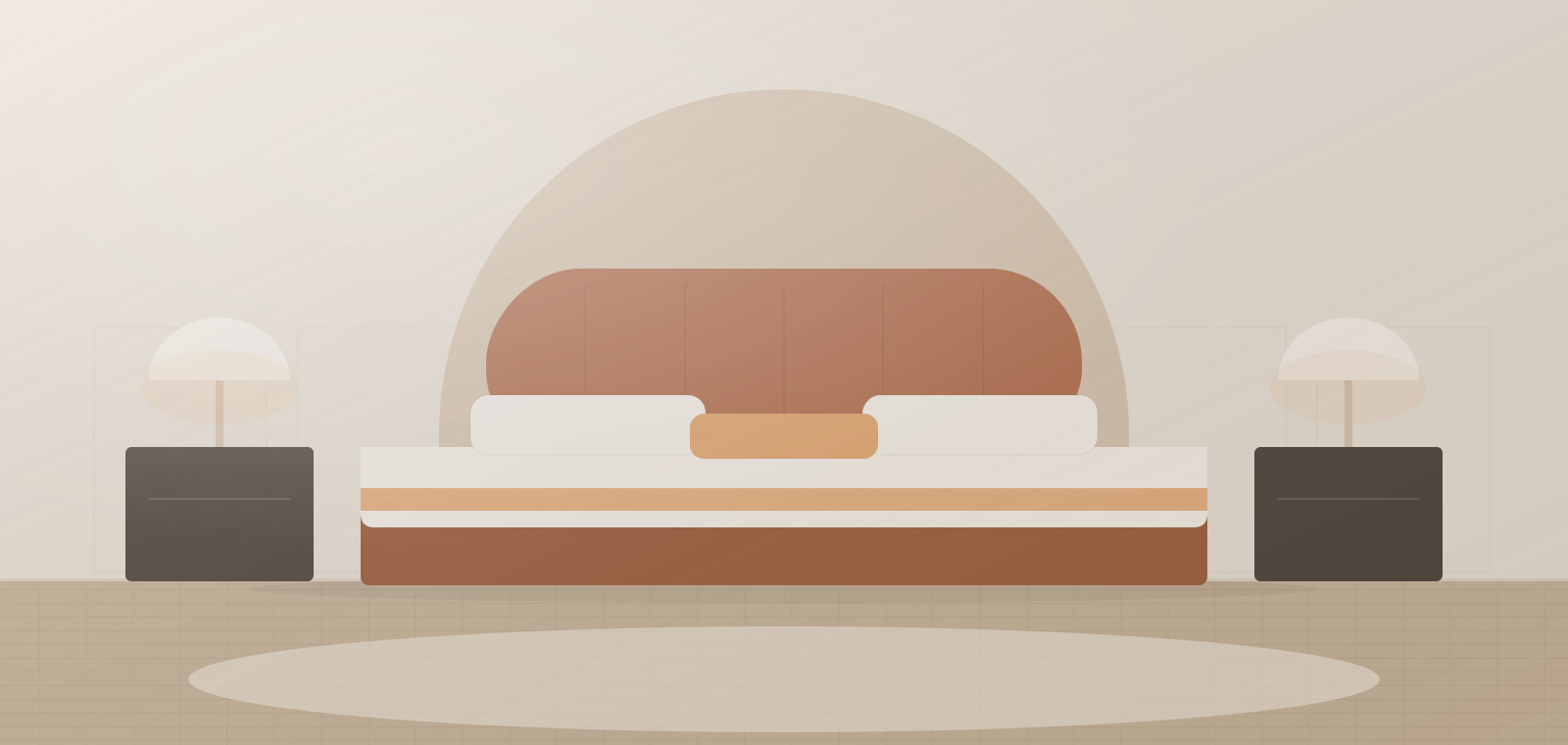
The bed is the largest object in the room, and in 2027 it is being treated as upholstery rather than furniture. Tall headboards in wool, linen or soft bouclé, sometimes wrapping the sides of the bed like a wing chair, turn the bed into an architectural element. Channel-tufted and plain-panel headboards both work; the key is height. A headboard of 50–60 in (127–152 cm) from the floor reads as intentional, and in rooms with tall ceilings, a wall-mounted panel running floor to near ceiling is an effective way to anchor the space.
Specify a removable or at least spot-cleanable fabric, and ask the maker about the frame, slat spacing and center support. For queen beds and larger, a center rail with at least one leg to the floor is essential; slats should be no more than about 3 in (7.5 cm) apart for most modern mattresses. Check the mattress warranty, which often sets the requirement.
2. Clay, plaster and a color palette for rest
The 2027 bedroom palette is warm and low contrast: clay, plaster pink, oat, sand and a deeper earth tone at the headboard or on the ceiling. These colors hold warmth in low light, which matters because most people see their bedroom in the morning and in the evening, rarely in full daylight.
#F1E6DA#DDBFA6#B9826A#8A5A47#5C4A3FColor drenching, painting walls, trim and ceiling in one tone, is particularly effective in bedrooms because it removes visual edges and makes the room feel calmer. Our color drenching guide covers sheen choices, and the paint calculator will estimate quantities. If you want to trial a scheme first, build it in the Palette Studio.
3. Bed, rug and nightstand sizing
Most bedroom problems are sizing problems. A rug that stops short of the nightstands, or nightstands that sit far below the mattress top, make even expensive furniture look wrong. Mattress standards also differ between regions, so always check which system a supplier is quoting in.
| Bed size | Mattress (in / cm) | Suggested rug | Nightstand width |
|---|---|---|---|
| US Twin | 38×75 in / 97×191 cm | 5×8 ft (150×240 cm) | 18–22 in (45–56 cm) |
| US Full | 54×75 in / 137×191 cm | 6×9 ft (180×270 cm) | 20–24 in (50–60 cm) |
| US Queen | 60×80 in / 152×203 cm | 8×10 ft (240×300 cm) | 22–28 in (56–71 cm) |
| US King | 76×80 in / 193×203 cm | 9×12 ft (270×360 cm) | 24–30 in (60–76 cm) |
| US California King | 72×84 in / 183×213 cm | 9×12 ft (270×360 cm) | 24–30 in (60–76 cm) |
| UK Double / EU 140 | 135×190 cm / 140×200 cm | 200×300 cm | 45–55 cm |
| UK King / EU 160 | 150×200 cm / 160×200 cm | 240×300 cm | 50–60 cm |
| UK Super King / EU 180 | 180×200 cm | 250×350 cm | 55–70 cm |
Three more rules complete the picture:
- Rug overhang: the rug should extend 18–24 in (45–60 cm) beyond each side of the bed, and ideally beyond the foot. Place it so it starts just in front of the nightstands, about two-thirds under the bed.
- Nightstand height: within about 2 in (5 cm) of the top of the mattress, usually 24–28 in (61–71 cm), depending on mattress thickness.
- Circulation: leave at least 24 in (60 cm), ideally 30–36 in (75–90 cm), on each side and at the foot of the bed, and about 36 in (90 cm) in front of a dresser so drawers can open.
Our rug size calculator takes bed size and room dimensions and returns the options that fit.
4. Hotel-style lighting, finally at home
Hotel rooms have long used low, layered lighting controlled from the bed. Homes are catching up. The pattern is simple: a dim ambient layer, a reading light on each side, and a low-level night light for navigation.
- Wall-mounted reading lights free up the nightstand. Mount them around 18–24 in (45–60 cm) above the mattress top, offset so the beam lands on the book, not the partner. A focused, adjustable head is better than a diffuse glow.
- Color temperature: 2700K or lower in the evening; warm-dim LEDs that shift toward 2200K as they dim are ideal.
- Controls: two-way switching or smart controls so the main light can be turned off from the bed.
- Night lighting: a low-level strip under the bed frame or a step light near the door, at very low output, avoids switching on bright light at night.
For the full method, see how to layer lighting.
5. Darkness and quiet as design features
Better sleep depends on darkness and quiet, and both are now being designed in rather than added later. Blackout linings behind linen curtains keep the soft look while blocking light. Mount the curtain track or rod high, close to the ceiling, and extend it 8–12 in (20–30 cm) beyond the window on each side so fabric stacks off the glass and light does not leak around the edges. A ceiling-mounted track with a return to the wall blocks light even more effectively.
For sound, soft surfaces do most of the work: a large wool rug, upholstered headboard, lined curtains and a full bookcase all absorb reflections. If street noise is the issue, curtains help only a little; acoustic secondary glazing or better window seals make the real difference.
6. Natural textiles and the layered bed
The 2027 bed is layered in natural fibers with visible texture: stonewashed linen, cotton percale, waffle weaves and wool throws. Colors stay tonal, but mixing two or three related shades feels more relaxed than a single matching set.
When buying or specifying bedding, the useful numbers are fiber, weave and weight rather than thread count alone. Linen is commonly described by weight in grams per square meter; around 150–190 gsm is typical for bed linen. For cotton, a well-made percale at a moderate thread count often performs better than an inflated number achieved with multi-ply yarn. For hospitality, ask about shrinkage after industrial laundering and whether the supplier can hold color across reorders.
7. Storage that disappears
Calm bedrooms have few objects on show. Full-height wardrobes with flush doors painted in the wall color, bed frames with gas-lift storage and upholstered benches with lift-up seats all keep clutter out of sight. Plan wardrobe depth at 24 in (60 cm) internally for hanging, and allow 36 in (90 cm) clear in front for doors to open, or use sliding doors where space is tight.
A bench at the foot of the bed should be roughly the width of the mattress or a little narrower, and no higher than the mattress top. Check that it leaves the 24 in (60 cm) minimum path to the wardrobe or door.
In smaller bedrooms, consider wall-hung nightstands or floating shelves in place of freestanding tables. They keep the floor visible, which makes the room feel larger, and make cleaning under the bed easier. Mount them at the same height a freestanding nightstand would be, level with or just below the mattress top, and plan the wiring for reading lights and chargers before the wall is finished. A recessed socket behind the headboard or inside a drawer keeps cables off the floor and out of sight.
8. Case goods, finishes and what to ask a supplier
Bedroom case goods, meaning nightstands, dressers and wardrobes, are moving away from high gloss toward oiled and matte finishes: rift-cut oak, walnut, ash stained in warm browns, and lacquer in muted clay or putty tones. Rounded edges, fluted fronts and leather or wood pulls replace sharp profiles and chrome handles. Nightstands with a drawer and an open shelf remain the most practical format; closed fronts hide clutter, while the shelf holds books.
When you buy or specify bedroom furniture, a short checklist saves problems later:
- Construction: solid wood, veneer over plywood or veneer over MDF. All can be good; ask which and where each is used.
- Drawer hardware: full-extension, soft-close runners, and the load rating of each drawer.
- Emissions: for composite panels, ask for compliance with CARB Phase 2 / TSCA Title VI in the US or E1 in Europe.
- Anti-tip: tall dressers and wardrobes should ship with wall anchors. In the US, clothing storage units must meet the federal stability requirements for tip-over.
- Finish sample: ask for a physical sample on the actual substrate, since stain on veneer can look different from stain on solid wood.
If you are furnishing multiple rooms, a boutique hotel or rental units, our sourcing desk can gather factory quotes against a written spec, and the hotel FF&E sourcing guide explains how to structure one.
9. Bringing it together
A trend-literate bedroom for 2027 looks simple, but it is built on specifications: a well-supported upholstered bed, a rug that is large enough, nightstands at the right height, warm and controllable light and serious window treatments. Get those right and the decorative layer, from ceramic lamps to a single piece of art, can stay restrained. If you would like a scaled plan and a shopping list, our e-design service covers bedrooms, and our quiet luxury guide shows how to keep the result feeling expensive rather than sparse.
Free toolCurtain Size CalculatorRod length, panel size, ready-made match and yardage.Shop & source the look
Buy it today — or have it made
Retail links are affiliate links: we may earn a commission at no extra cost to you (disclosure). “Get it made” sends the item to our sourcing desk for factory quotes in custom sizes and finishes.
Frequently asked questions
What size rug goes under a queen bed?
An 8×10 ft (240×300 cm) rug is the standard choice. It extends about 18–24 in beyond each side of the bed when placed two-thirds under it.
How tall should nightstands be?
Aim for within about 2 in (5 cm) of the top of the mattress, which usually means 24–28 in (61–71 cm) depending on the bed and mattress.
What colors are trending for bedrooms in 2027?
Warm, low-contrast tones such as plaster, sand, clay and deeper earth browns, often applied as a color drench across walls, trim and ceiling.
How much space do you need around a bed?
Allow at least 24 in (60 cm) on each accessible side and at the foot, and 30–36 in (75–90 cm) if space allows.
Some links may be affiliate links. Regulations and specifications change — always confirm with suppliers and qualified professionals.